


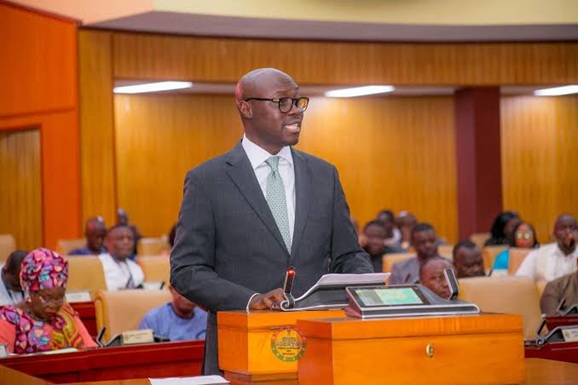
TL;DR
• Ghana’s 2027 Budget commits US$300 million over 2027 and 2028.
• The money covers a National AI Centre and upgrading rural 2G networks to 4G.
• The centre will offer shared computing, labs and training to firms, researchers and public bodies.
• The Budget does not say who builds it, where it goes, or how the money splits.
Ghana is putting real money behind AI. The 2027 Budget sets aside US$300 million across 2027 and 2028 for a National Artificial Intelligence Centre and for lifting rural networks from 2G to reliable 4G. It is the eighth and final pillar of the government’s New Economy programme, and the number shows up in both the Budget Statement and the speech that went with it. The figure has moved before. Earlier reports of Cabinet approval put the AI project alone at US$250 million. This time the AI centre and the network upgrade share a single line, so the two numbers are not directly comparable.
What the centre is meant to do
The idea is shared infrastructure. Companies, universities, researchers and public bodies would get access to applied research labs, model testing, high-performance computing, secure data environments, professional training and start-up support. Most of those users could never afford that stack on their own, so pooling it is the sensible part of the plan.
Priority areas include agriculture, health, energy, mining, logistics and public services. Ghanaian languages are on the list too, which matters more than it might sound. Models that handle Twi, Ewe, Dagbani and Ga properly are still rare, and someone has to build them. Small businesses are meant to get help adopting digital tools, with the Budget saying those tools must show measurable productivity gains.
Training is the other leg. The centre is supposed to teach young Ghanaians software development, data analytics, AI, networking and digital business services, with the pitch that industry-linked, hands-on skills lead to better-paying jobs.
The rural 4G half
The connectivity side is simple to state. The Budget argues that a farmer with a decent signal can get weather and market information and accept digital payments, a clinic can run telehealth, and a student can reach learning content. It ties the whole thing to a larger point about geography. Where you live in Ghana should not decide whether you can use modern digital services.
What the Budget leaves out
Here is the catch. The Budget does not name who will build or run the centre, where it will be located, or when in the two-year window each piece will land. It also gives no split between the AI centre and the 4G upgrade, so we cannot tell how much of the US$300 million is actually going to compute and how much to towers.
The government says AI will be governed with responsibility as well as ambition, with human accountability for high-impact decisions and privacy, cybersecurity and accessibility built in. That is a fine line to put in a Budget. It would be more convincing with a regulator or a framework attached.
The training promise also deserves some scepticism. Ghana Digital Centres, under the 1 Million Coders drive, have trained 102 people so far. A big number on paper and a small one in practice is a gap the new centre will have to close fast.
Why this matters for Ghana’s tech scene
For local developers and startups, a shared national compute facility could remove the biggest barrier to serious AI work, which is the cost of hardware and data infrastructure. If language models for Ghanaian languages become a funded priority, that opens real product opportunities for founders who already build for local users in the languages they actually speak. The rural 4G push matters just as much, because AI tools that need a connection are useless to the farmers and clinics they are supposed to serve. Ghana has announced big digital plans before, and delivery is where they usually stall. This one will be judged by whether a site is chosen, a builder is named and the first lab opens on schedule.
We will update this story when the government says who will build the centre and where it will sit.